When buying dates, one of the most confusing decisions is: buy loose dates (by the kilo, weighed) or packaged dates (sealed box/pack)? Then which size should you buy — 250 grams, 500 grams, 1 kg, or straight to 5 kg? This question is so common that even outlets like Kompas have discussed it. This article lays out the pros and cons of each option in terms of price, hygiene, freshness, and convenience, complete with tables so you can decide with confidence.
Loose Dates vs Packaged Dates: What Is the Difference?
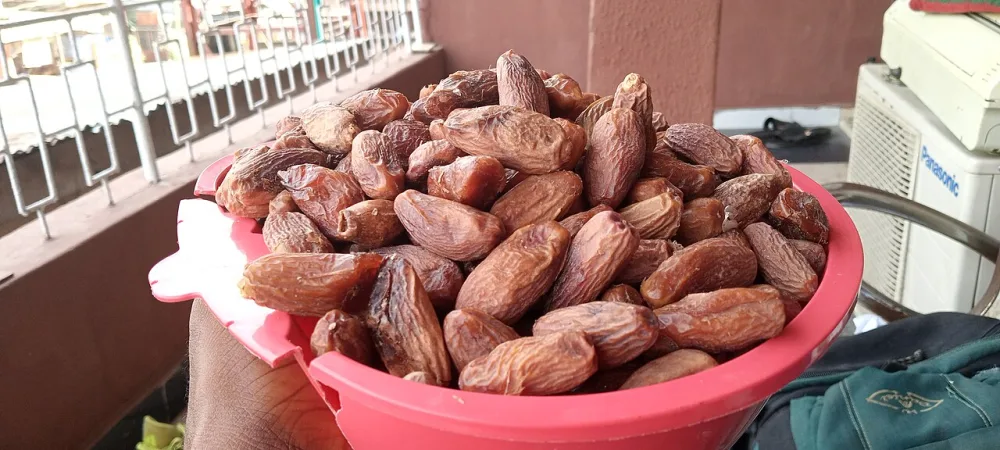
Loose dates are sold unpacked and weighed on demand, typically found at markets, wholesale shops, or specialty stalls. Packaged dates are sold in a sealed container with a brand label, variety, grade, and net weight. Both can contain exactly the same dates — the difference lies in presentation, guarantee, and price.
Advantages of loose dates
- More economical, especially for large purchases; the per-kilogram price drops with volume.
- You can see and sometimes taste before buying.
- Flexible — buy exactly as much as you need.
Disadvantages of loose dates
- Hygiene depends on the venue; open dates risk dust or insects, so they need washing before consumption.
- No clear grade and origin label.
- Quality can be uneven because sorting is not always strict.
Advantages of packaged dates
- More hygienic because they are tightly closed and sealed.
- More assured quality as they are usually sorted, with grade and origin labels.
- Practical for gifting and storage.
Disadvantages of packaged dates
- The per-kilogram price tends to be higher due to packaging and branding costs.
- You cannot taste before buying.
Loose vs Packaged Comparison Table
| Aspect | Loose Dates | Packaged Dates |
|---|---|---|
| Price per kg | Cheaper (especially large volume) | Higher |
| Hygiene | Venue-dependent, needs washing | Tightly closed & sealed |
| Quality/grade guarantee | Not always clear | Labeled grade & origin |
| Best for | Bulk stock, mass iftar, resellers | Gifts, home use, souvenirs |
| Can taste first | Often yes | No |
| Storage convenience | Needs own container | Ready to store |
Which Pack Size Should You Buy?
After choosing between loose and packaged, consider the size. In general, the larger the pack, the cheaper the per-kilogram price. Here is a practical guide by need.
| Size | Best for | Price-per-kg note |
|---|---|---|
| 250 g | Taste test, small gift | Most expensive per kg |
| 500 g | Personal use, seller test | Cheaper than 250 g |
| 1 kg | Small family, monthly stock | Medium savings |
| 3–5 kg | Large family, Ramadan | Large savings |
| 10 kg+ / carton | Resellers, mosque iftar | Cheapest per kg (wholesale) |
As a consumption guide, a family of four to five generally needs about 2–4 kg for a full month of Ramadan. For daily consumption outside Ramadan, adjust to your family's habits.
Does Buying a Lot Risk Spoiling Quickly?
No, as long as it is stored properly. Dry dates can last for months, even over a year, at room temperature in a closed container, and longer in the fridge or freezer. So buying a large size to save money makes sense as long as you have good storage. The exception is wet dates such as Mazafati or Ruthob, whose high moisture makes them spoil faster; they should be kept cold and bought only as needed.
Practical Recommendations
- For gifts: choose neat, labeled sealed packaging.
- For routine home consumption: a 1 kg pack balances price and convenience.
- For bulk stock/mass iftar/resellers: loose or a 5–10 kg carton is the most economical.
- For trying a new variety: start with 250–500 grams.
Storing So Bulk Purchases Stay Quality
The key to keeping a large purchase worthwhile is proper storage. Here is a brief guide:
- Room temperature: dry dates in a tightly closed container away from moisture can last for months.
- Refrigerator: storing in the fridge extends freshness and keeps the texture soft, ideal for Greater Jakarta's hot climate.
- Freezer: for very long-term stock, dates can be frozen without much quality change; thaw at room temperature before serving.
- Avoid: open containers, humid spots, and direct sunlight, which speed up spoilage.
With proper storage, buying a more economical large size becomes a sensible decision without worrying about waste.
Loose Does Not Mean Low Quality
There is a misconception that loose dates are always low quality. In fact, many loose dates come from the same imported cartons that are later repackaged into branded packs. The difference is not the contents but the presentation, hygiene guarantee, and labeling. If you buy loose from a trusted seller who keeps the venue clean and states the variety and origin, you can get good quality at a lower price. Conversely, branded packaging adds value through sorting, a hygienic seal, and grade clarity — important especially for gifts or when you want to ensure authenticity.
Recommendations by Purchase Purpose
For resellers and culinary businesses prioritizing cost, buying loose or a large carton is the most rational choice. For families prioritizing convenience and hygiene, a 1 kg pack offers an ideal balance. For gifts, neat, labeled sealed packaging is a must for both impression and assurance. And for beginners wanting to learn their taste, starting with a small sealed size is the safest step before committing to a large purchase. Matching the purchase format to your purpose is what makes your date shopping the most efficient.
A Note
This guide is educational as a shopping-decision aid; price ranges and availability may vary by seller and season. If you buy loose, ensure the venue is clean and wash the dates before consumption. If you are a first-time buyer, pair this with our guide on the most popular dates for beginners so your choice of variety and size truly fits.